

Hello and happy Tuesday!
Last week, Amy shared her Global Writing Challenge post, and it was about poetry…and I wish I had realized about this link up. So, my post is a few days late, but it’s on one of my favorite teaching topics…poetry.
Also, this is already the sixth week of school, and I haven’t shared a Teacher Talk Tuesday since before school started. So, the challenge and a teacher talk provide for a post I’m excited to write!

Now, I’m not much of a poet, but I love teaching our poetry unit.
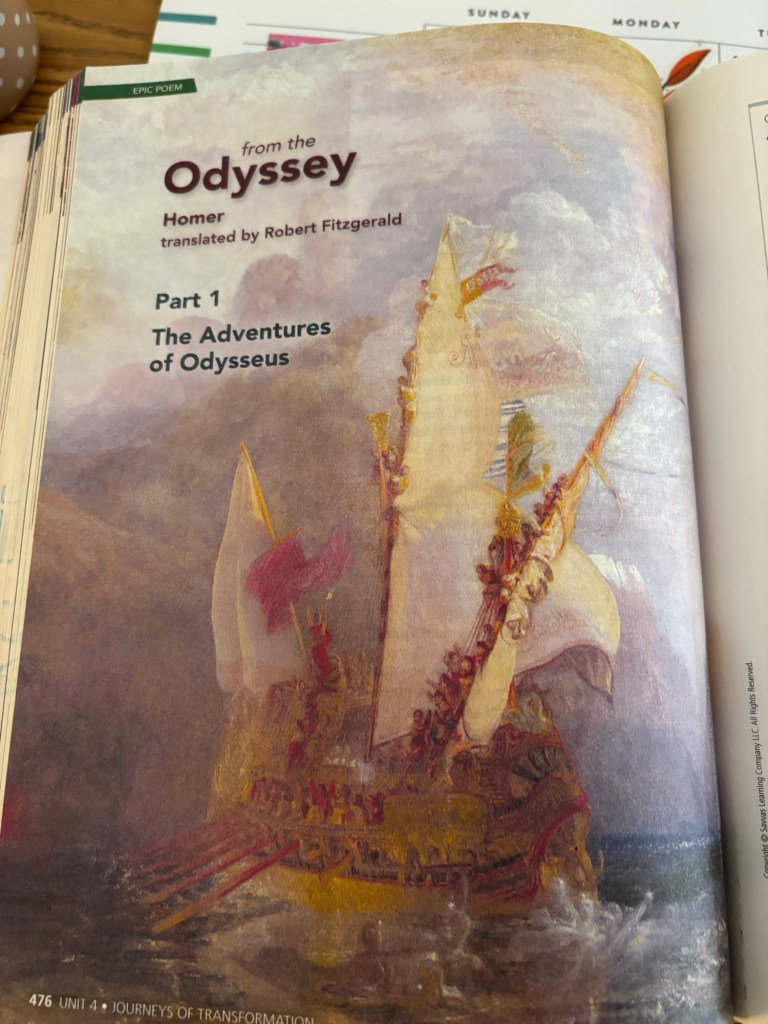
With my freshman, we are just starting The Odyssey. Their mind is always blown that this is an epic poem, but we have a lot of fun reading this text. Who doesn’t love a Cyclops, unruly men, gods/goddesses, fighting and more?!
This year, we’ve combined our Advanced English 1 and Advanced English 2 classes. I’m actually against this idea, but with it comes a new curriculum that a few of us are creating. For this Adv. 1 / 2 class, our first unit is poetry.
How do you think most high schoolers feel about poetry? Yeah…they aren’t typically super excited about this. One thing that I always try and do is make each lesson similar but different. This way, they know what to expect, but they aren’t bored.
I think students are hesitant about poetry mostly because it can be overwhelming. Also, students like to know if they are right or wrong with a response, and, as I teach them, poetry is open to interpretation!
Also, from the beginning, I share with them that reading poetry is a process. You can’t read a poem just once and immediately understand it. I tell them I’ve read quite a few poems many times through the years, and I almost always find something new to take away or analyze every time I read.
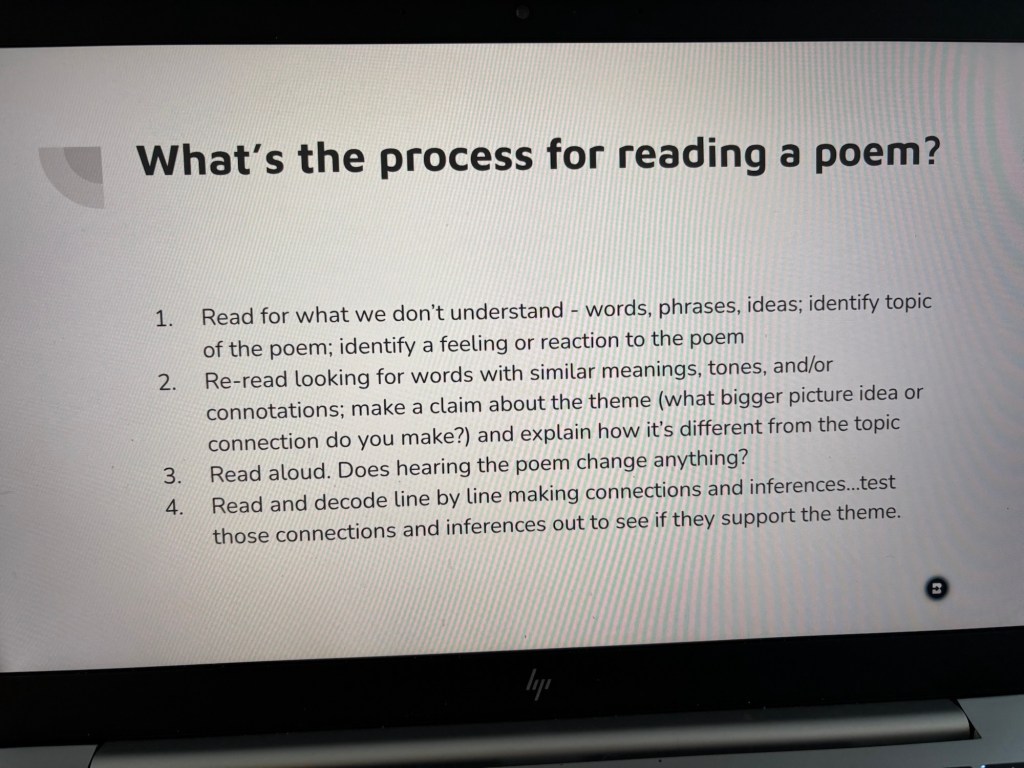
So, I share this slide before every lesson, and students have to read through poems a few times with a different focus each time.
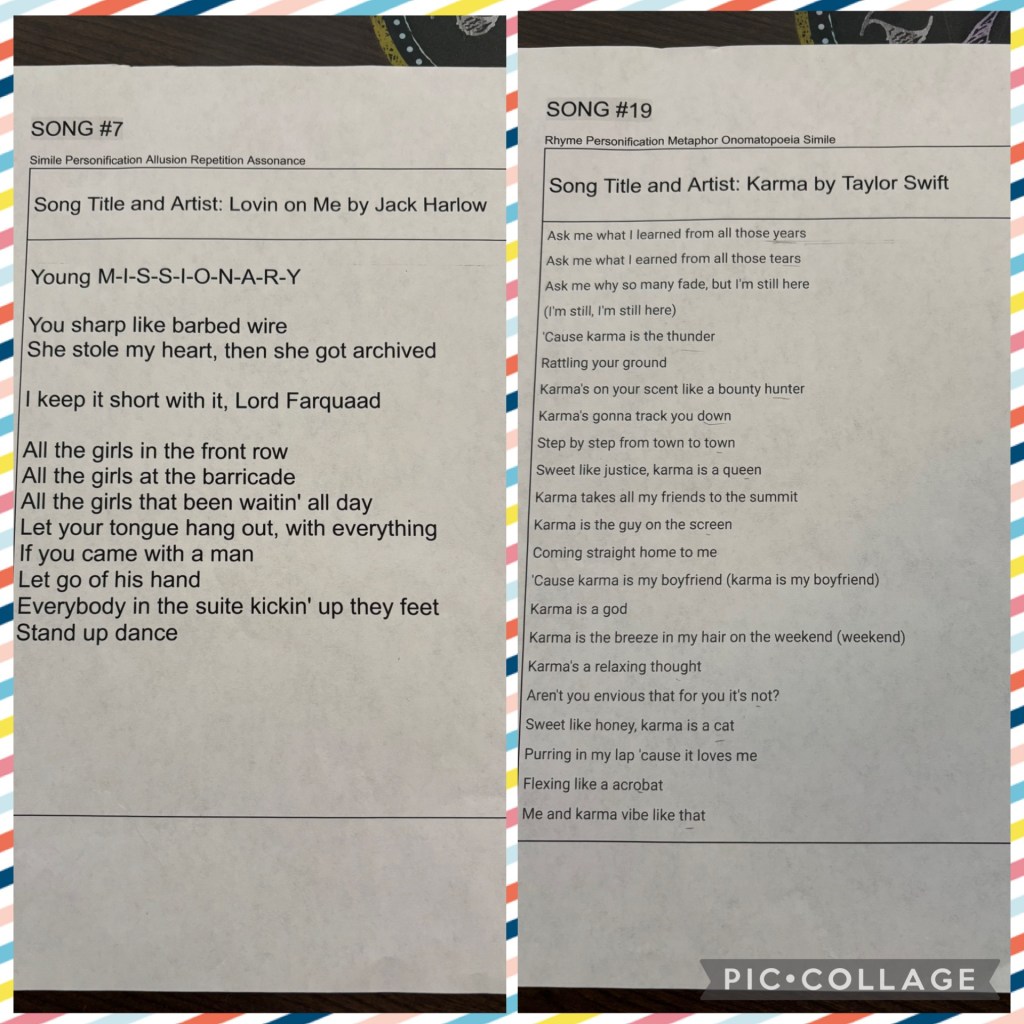
One lesson that was a hit was connecting poetry to music. I did get this specific lesson off Teachers Pay Teachers, but there was a worksheet and many songs for students to analyze. I had Hadley sift through the thirty songs and find the top twenty that I should have my class use. Each song had specific elements to find and write on their worksheet. For example, Taylor Swift’s Karma has rhyme, personification, metaphors, onomatopoeia, and similes.
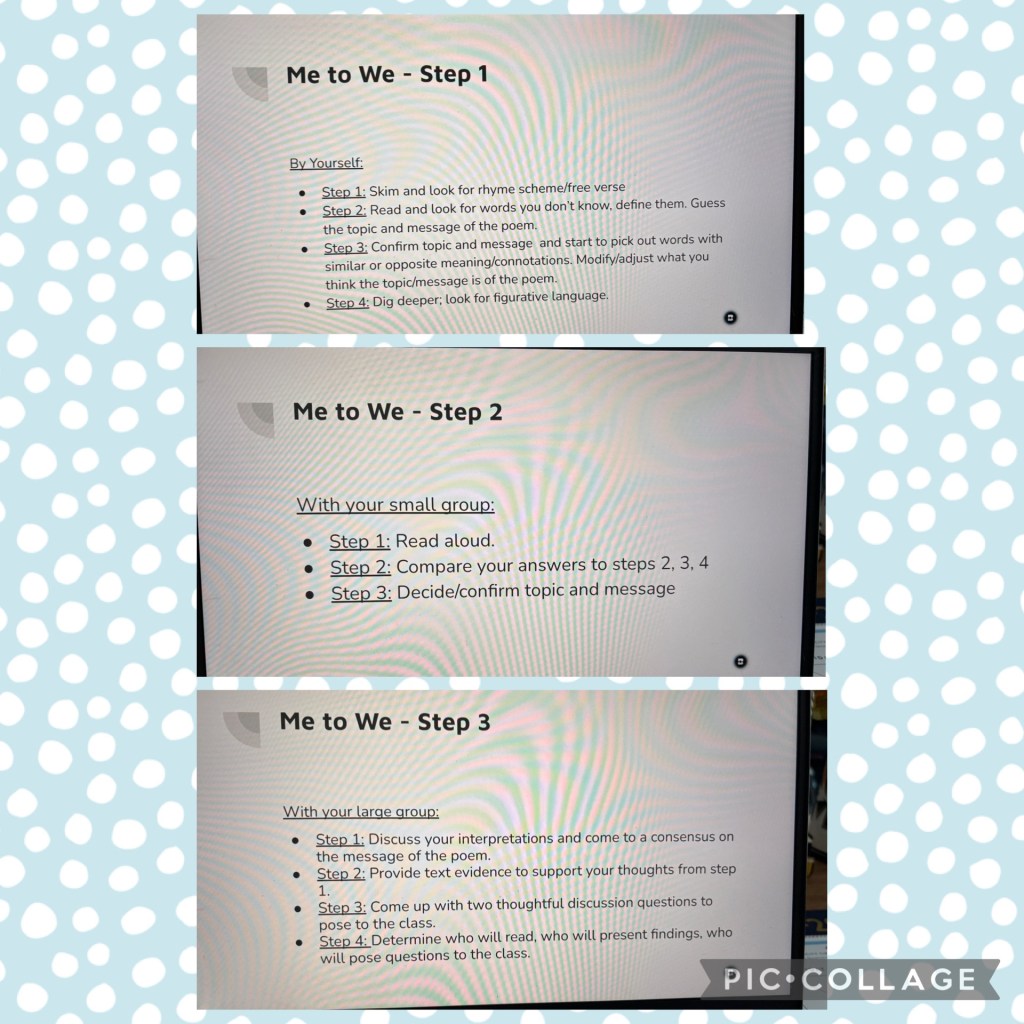
After a few lessons with analyzing poems, we implemented the “Me to We” strategy. I assigned a variety of poems, and students analyzed them individually for step one, then they found their small group (I put a letter on their paper), and they moved on to step two. There were four total poems, so for step three, they all found the other students who had the same poem. The final step was for the different groups to share out to the class…of the bigger group, only three people had to present. One student read the poem aloud, another shared some of the figurative language they found, and the last student shared overarching questions the poem raised while reading it.
This activity was a hit!
Our focus last Friday was three poems. I had students spend some time doing the four step reading process for all three poems. Then, I modeled for them how I analyzed each one…but I only pointed out a few things for each poem. After that, I showed them two to three minute videos where others were analyzing the poem more in depth and had them take notes while listening.
After that, they got into groups based on the poem title I highlighted in their packet.
Another Teachers Pay Teachers find were these discussion questions. There are five total sheets of six questions each, thirty total questions. These have come in so handy! (So, I have the sheets of papers with six questions per page, and then I have individual ones to use as well if that makes more sense for the activity)
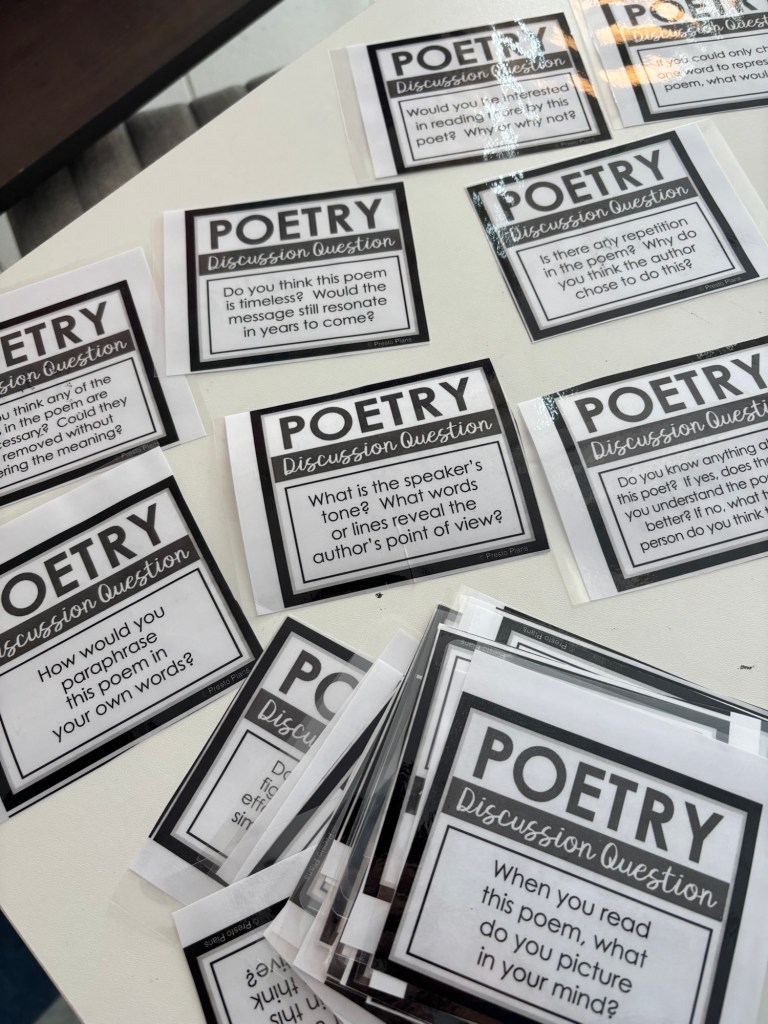
I gave each student a handout with their six questions and one of my big sticky note papers. In their groups, they did the “placemat” strategy. I love this strategy, and it’s one I’ve used for years. You sit around your paper, and section off a section to complete your work. In the middle, you write the title of the poem and the author. Then, the students answered their six questions in their space and discussed with their groups.
I was short on time, so I went around to each table, and asked each student to share one of their questions and responses aloud, so that I could mark them off for participation.
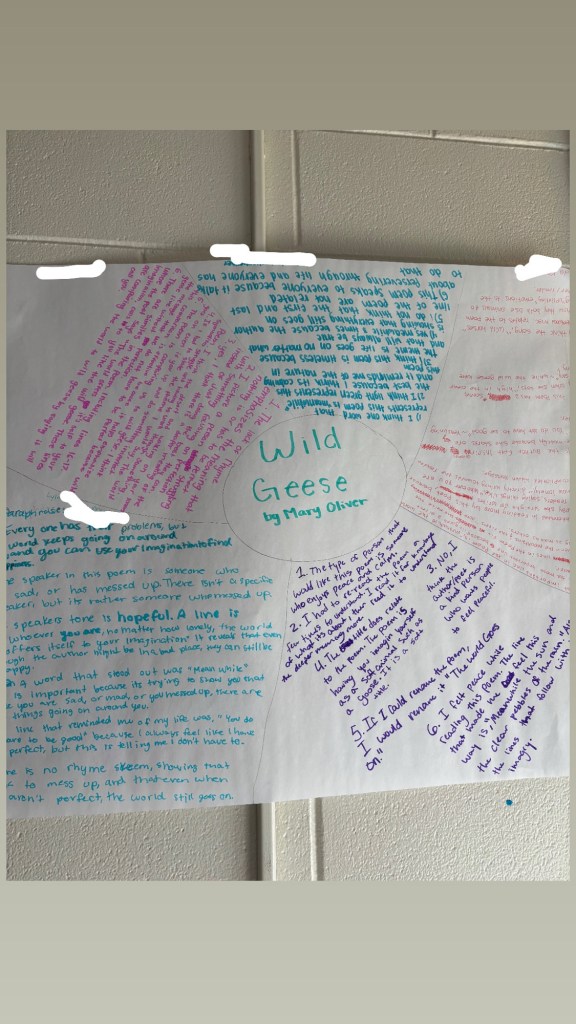
I hung the finished products around the room, and when they came in my room yesterday, they immediately went to look at the other group’s papers.
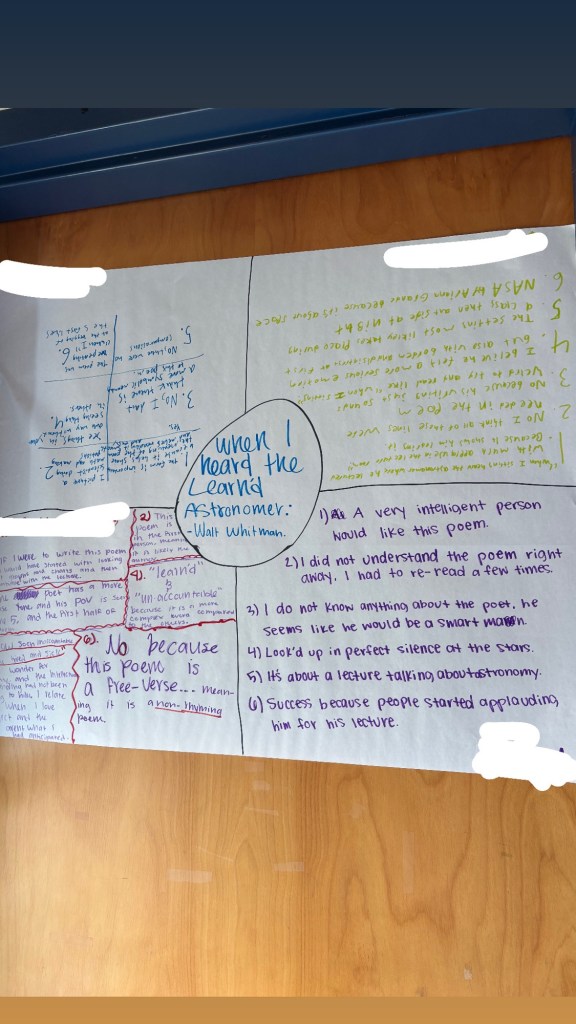
This strategy can be used so many ways, and after we do that one or two times, they know my expectations for that strategy (and other strategies I use often with them).
Yesterday, students did a gallery walk analyzing poems around the room. The worksheet that guided them for each poem had a step by step process on what to look for at each poem, and to read the poem to themselves and then a group member would read it aloud to the small group as well.
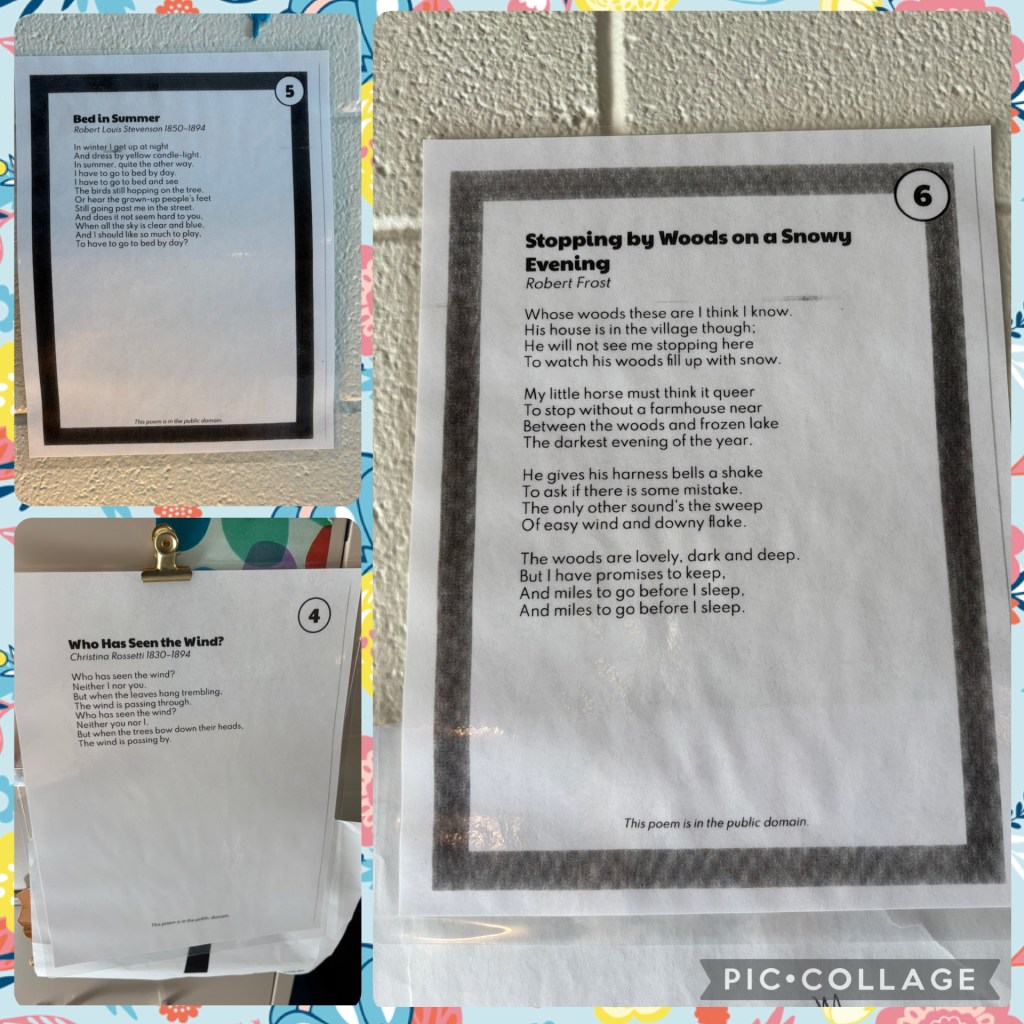
We will finish this gallery walk tomorrow in class since there are eight stations, and we only got to half of them today.
For bellringers, I’ve had students write a haiku, an acrostic poem, and a limerick, and they always think those are fun.
I’m always impressed by the levels of participation that I get on these activities, and the poetry unit is one of my favorite ones to teach.
They’ll write a Where I’m From poem and take an assessment to round out the unit after fall break!
There’s a little peek into my classroom. Let me know if you have any questions.


